
How to Stop Apologising for No Reason
Say Sorry Less. Mean it More.
Your free guide
Written for the everyday moments: asking for help, being late, taking up space, saying no.
Your free guide
Written for the everyday moments: asking for help, being late, taking up space, saying no.
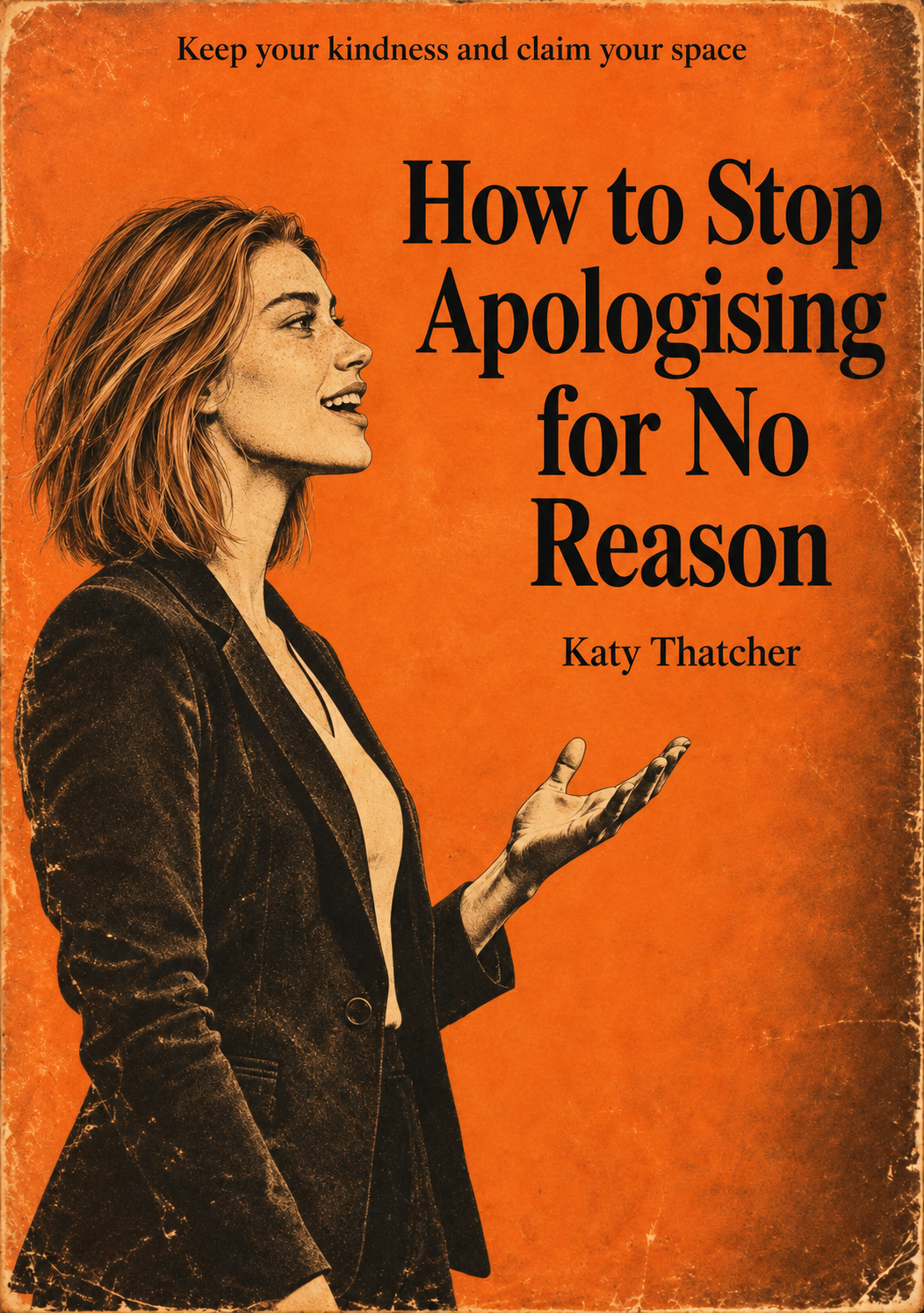
Most of the apologies you make aren’t about fault. They’re about safety: smoothing the moment before anything has gone wrong, so that nobody can be annoyed with you.
That’s why stopping is so hard. The apology arrives before the thought does, and holding it back feels worse than saying it.
It isn’t worse. That flicker of discomfort is the feeling the apology was there to manage, and it is not evidence that you did anything wrong.
Inside the guide you’ll find [add the sections of your guide, or how many pages it is].
✦